
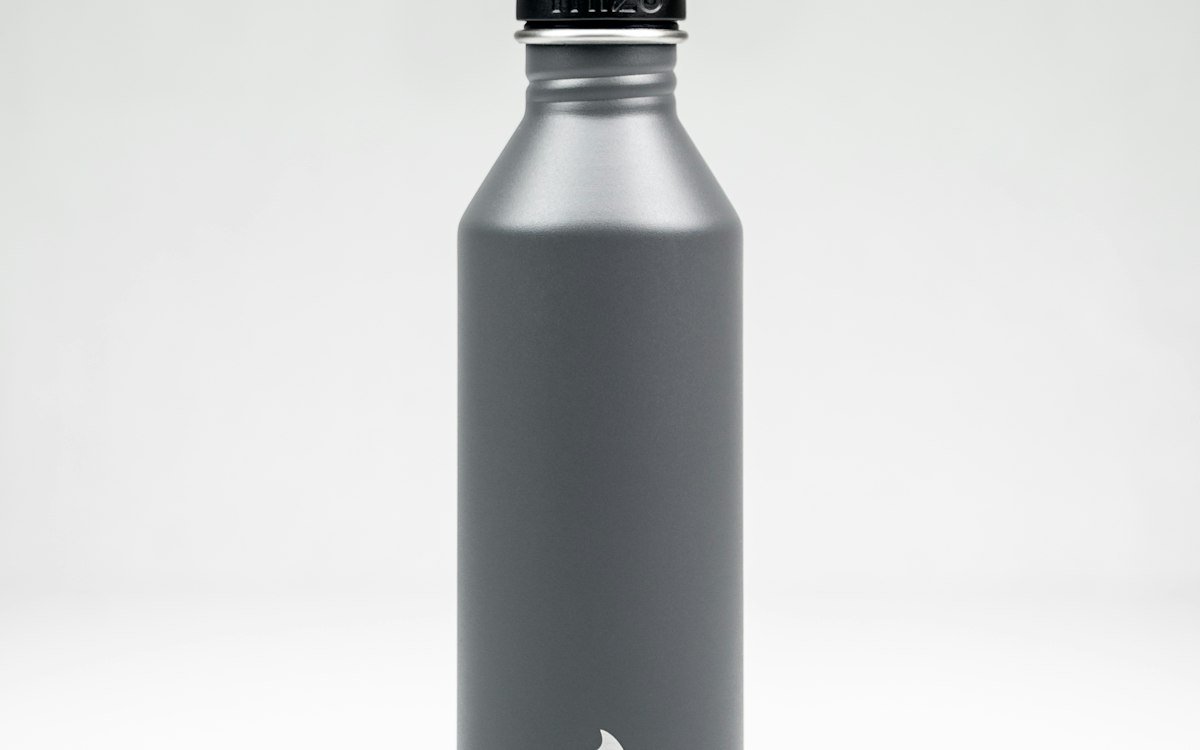
A water bottle is a simple object with about six decisions in it, and most people discover which ones mattered after the bottle leaks into a bag or tastes of yesterday's coffee.
Material
Stainless steel. Does not hold flavour, does not break, and is the only material that comes in a genuinely insulated form. Food-grade 18/8 (304) is the standard; 316 is more corrosion-resistant and appears in better bottles. Heavier than anything else here.
Tritan and other BPA-free plastics. Light, cheap, usually clear so you can see the level. Picks up flavours over time, especially from squash and coffee, and scratches inside where bacteria sit.
Aluminium. Light and cheap, but aluminium reacts with acidic drinks so it must be lined — usually with an epoxy resin. That lining is the bottle's weak point; once it chips, the bottle is done.
Glass. Best possible taste neutrality, heaviest, and breaks. Fine for a desk, poor for a bag.
Collapsible silicone. Packs down to nothing when empty, which is genuinely useful for travel. Harder to clean, and most will hold a faint silicone taste.
Insulation, and what the hours mean
Vacuum-insulated bottles have two walls with the air removed between them. Heat cannot cross a vacuum by conduction or convection, so the contents hold temperature for hours.
Claims like "cold for 24 hours" are measured under favourable conditions: a full bottle, filled with ice water, sealed, left at room temperature and not opened. Every time you open it you reset a good part of the clock, and a half-full bottle performs much worse than a full one because of the air inside.
Single-wall bottles have no insulation and will sweat with cold liquids — which is what soaks the inside of a bag.
The opening is the decision people regret
Wide mouth (about 50mm and up). Takes ice cubes, easy to clean by hand, easy to fill from a tap. Harder to drink from while moving — you will pour it down yourself in a car.
Narrow mouth. Controlled drinking, awkward to clean, will not take ice.
Sports cap or straw lid. Drink one-handed without tipping. More parts, and every part is somewhere for mould.
The best compromise is a wide-mouth bottle with a separate narrow drinking lid, so you get cleaning access and controlled drinking.
Leaks
This is the failure that matters most, because it happens in a bag with a laptop in it.
- Screw caps with a silicone gasket are the most reliable. Check the gasket is present, seated and removable for cleaning.
- Flip-top and push-button lids have more moving parts and more ways to fail. Convenient, and worth testing over a sink before trusting them to a bag.
- Straw lids frequently weep, and almost always leak if the bottle goes on its side with a carbonated drink in it.
Almost no bottle is safe with fizzy drinks unless it says so. Pressure finds the gasket.
Cleaning, and the part nobody does
Most bottle problems are cleaning problems. Two specifics:
The gasket. The silicone ring in the lid comes out. Underneath it is the place mould grows, and it is invisible until you remove it. Take it out weekly.
The straw and the spout. These need a thin brush. Rinsing does not reach them.
Dishwasher-safe usually applies to the body, not always the lid — heat can deform lid plastics and degrade gaskets. When in doubt, wash the lid by hand.
For a bottle that has picked up a smell: bicarbonate of soda and warm water overnight, then rinse. For plastic bottles with a lingering taste, this works less well than people hope, which is the real argument for steel.
Size, honestly
500ml fits most bike cages and bag pockets, weighs little, and is not enough for a day out.
750ml–1 litre is the usual sweet spot — a reasonable amount of water without being unwieldy.
1.5 litres and up is heavy. A litre of water weighs a kilo, and a full 2-litre bottle plus its own weight is over 2.3kg to carry all day.
Airport security
Empty bottles pass through security in most countries; full ones do not, whatever the liquid. Insulated steel bottles occasionally draw a second look because the double wall is opaque to X-ray. Neither is a reason to avoid one — just arrive with it empty.
More kit notes are filed under Outdoors & Travel.