
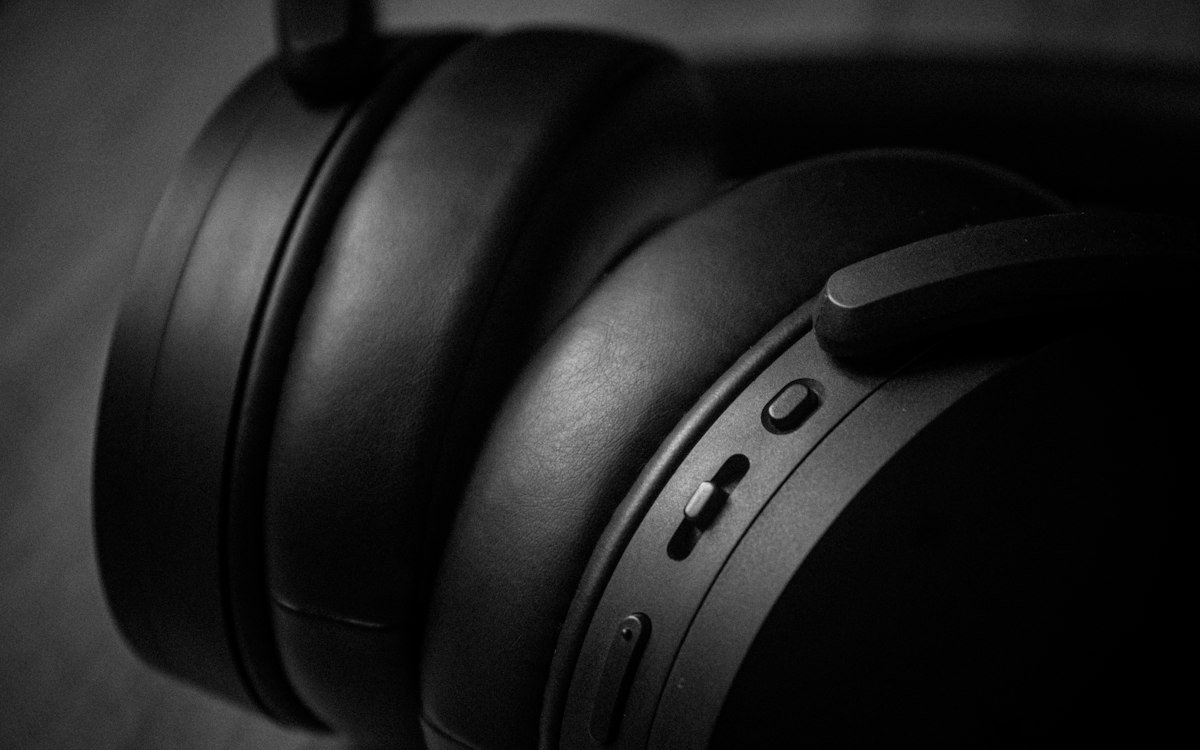
Wireless headphones outsell wired ones by a wide margin, and for most listening that is the right outcome. There are still four situations where a cable is not nostalgia but the better tool.
Latency
Bluetooth adds delay. Audio is compressed, transmitted, buffered and decoded, and that takes time — typically 150–200ms on standard codecs, and 40–80ms on low-latency ones.
For music it does not matter. For video, most platforms compensate automatically and you never notice. For anything where you produce the sound yourself, it is fatal:
- Playing an instrument through an interface
- Competitive gaming, where footsteps arriving late is a real disadvantage
- Recording or monitoring anything
A cable has effectively no latency. This is the clearest case where wired still wins outright.
Consistency
Bluetooth shares the 2.4GHz band with Wi-Fi, microwaves, and every other Bluetooth device nearby. On a quiet street it is flawless. In a station concourse, a gym, or an open-plan office at nine in the morning, dropouts happen.
A cable does not care how many other people are in the room.
Battery
A wired headphone has no battery to run out, no battery to degrade, and no firmware to update. Lithium cells lose capacity with cycles regardless of care, and in a sealed earbud the battery is usually the part that ends the product's life — typically after two to four years.
A wired headphone that was good in 2015 is still good. That is not true of any wireless model from the same year.
Sound, honestly
This is where the argument is usually overstated. Modern codecs at reasonable bitrates are transparent enough that, on the same drivers, most listeners cannot reliably tell wired from wireless in a blind comparison.
What genuinely differs:
- At the same price, a wired headphone spends nothing on radio, battery, microphones or charging case, so more of the budget goes into the driver and build. A £100 wired headphone usually outperforms a £100 wireless one.
- High-impedance headphones need more voltage than a phone or a small wireless amplifier can supply. These are studio and enthusiast models, and they need a headphone amplifier either way.
- Bluetooth is lossy. It is a real technical difference. Whether it is an audible one, at the volumes and in the places most listening happens, is a much weaker claim than it is usually given.
Where wireless wins, and it is not close
Movement. Exercise, housework, cooking, commuting with a bag. A cable catches on things and pulls buds out of ears.
Convenience. No jack on the phone, no adapter to lose, no cable to untangle.
Noise cancelling. It requires power and processing. There are wired ANC headphones, but they are a small and unloved category.
Phone calls. Microphone placement on a wireless headset is generally better than on an inline remote.
The adapter problem
Most phones no longer have a headphone socket. A USB-C to 3.5mm adapter solves it, but check which kind you are buying:
- A passive adapter is just wiring, and only works if the phone has a digital-to-analogue converter that can output analogue over USB-C. Many do not.
- An active adapter contains its own converter and amplifier, works with any phone, and costs more.
If an adapter produced no sound on one phone and worked on another, this is why.
A reasonable position
Own wireless for moving around and wired for sitting still. The wired pair does not need replacing on a battery cycle, costs less for the same sound, and is the answer on the days the radio is not cooperating.
If you only want one pair, buy wireless — but buy one with a 3.5mm socket, which many over-ear models still have, and you keep the cable as an option rather than a separate purchase.
More audio notes are filed under Tech & Audio.